GREEK ODYSSEY ATLAS

Ancient wonders & island days across the Greek world

Site by Dan Vineyard — images and site © 2026

Mosaic for Heraklion
Southern GreeceCrete

01.Heraklion

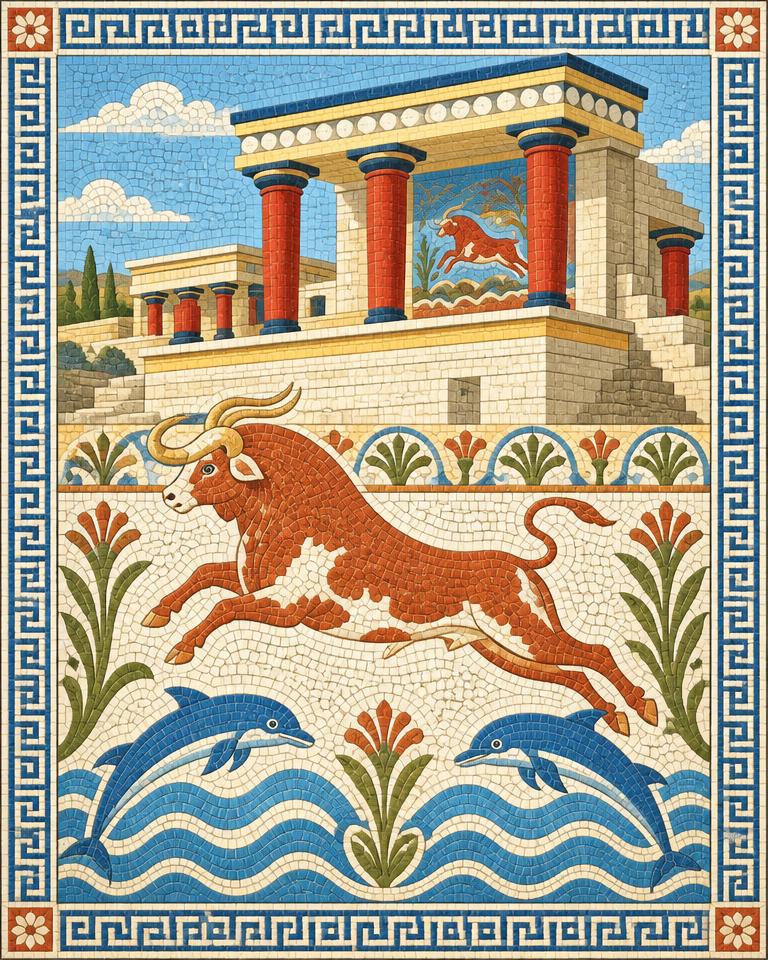
Heraklion is Crete's capital and the doorway to Europe's first great civilisation. Just 5 km south lies the Palace of Knossos, the 1,300-room Minoan complex excavated by Arthur Evans from 1900 and tied to the legend of King Minos and the Minotaur's labyrinth. Back in town, the Archaeological Museum holds the world's finest Minoan collection, including the Phaistos Disc, the bull-leaping fresco and the snake goddesses. Walk the 16th-century Venetian walls to the tomb of Nikos Kazantzakis, author of Zorba the Greek, then end the day at the Koules fortress as fishing boats return to the old harbour.

Top 3 to see

  1. I.Palace of Knossos

    Minoan, c. 1900–1400 BC

    Minoan labyrinth complex dug out by Arthur Evans in 1900.

  2. II.Heraklion Archaeological Museum

    Building 1940; finds c. 7000–1100 BC

    Best Minoan art anywhere: Phaistos Disc, bull-leaping fresco.

  3. III.Koules Venetian Fortress

    Venetian, 1523–40

    16th-century sea fort at the harbour mouth; great at sunset.

Top 3 to eat

  1. I.Dakos (barley rusk salad)

    Rusks ancient; tomato version 20th c.

    Hard barley rusk soaked soft, tomato, mizithra cheese, olive oil.

  2. II.Kalitsounia cheese pies

    Byzantine-era Cretan

    Hand-pinched pies of soft myzithra and mint, baked or fried.

  3. III.Raki with mezedes

    Ottoman-era, earlier still

    Grape brandy sipped slowly with a parade of small shared plates.
Mosaic for Chania
Southern GreeceCrete

02.Chania

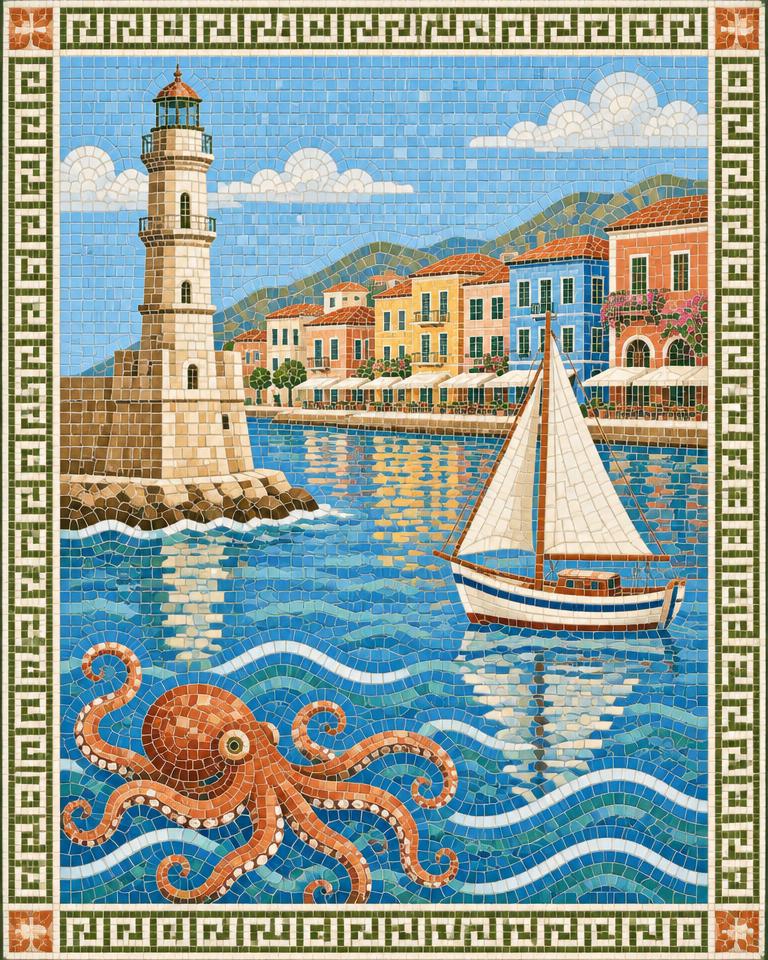
Chania was Kydonia to the Minoans and is one of the oldest continuously inhabited towns in Europe. Its crescent Venetian harbour, guarded by a lighthouse rebuilt in the 1830s, is lined with 14th-century arsenals, the pink-domed Kucuk Hasan Mosque and lanes of the former Jewish and Turkish quarters. Ruins of Minoan Kydonia sit right in the old town on Kastelli hill. From here, day trips reach the 16 km Samaria Gorge, the pink-sand beach of Elafonisi and the turquoise Balos Lagoon guarded by the island fortress of Gramvousa.

Top 3 to see

  1. I.Venetian Harbour & Lighthouse

    Harbour 14th c.; lighthouse 1838

    Crescent of 14th-century arsenals, Egyptian lighthouse at the end.

  2. II.Archaeological Museum of Chania

    Venetian church c. 1500; museum 1962

    Minoan and Roman finds from Kydonia, in a 15th-century church.

  3. III.Balos Lagoon

    Natural lagoon; fort 1579

    Shallow turquoise sandbar beach, by boat or down a steep path.

Top 3 to eat

  1. I.Boureki (zucchini & potato bake)

    Ottoman-era Cretan

    Sliced zucchini and potato baked under a rich staka custard.

  2. II.Chaniotiko kalitsouni

    Byzantine-era Cretan

    Chania's own cheese pie, closed like a dumpling, sugared on top.

  3. III.Staka with eggs

    Ottoman-era shepherd's cooking

    Goat's-milk butter cooked down until creamy, fried with eggs.

Mosaic for Syracuse
ItalySicily, Italy

03.Syracuse

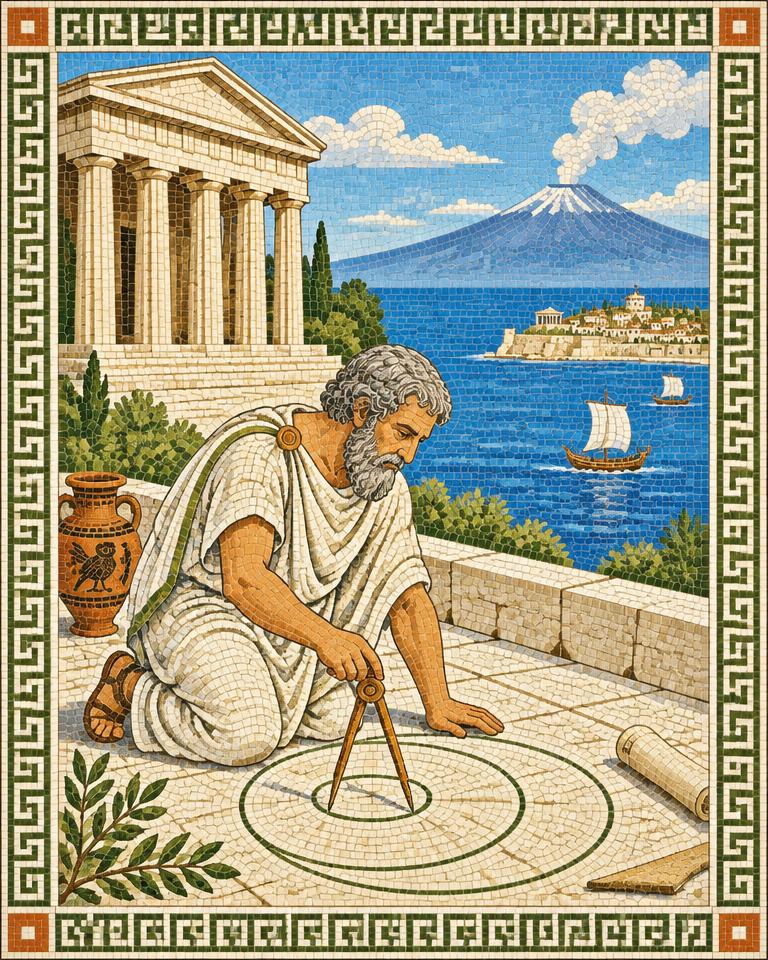
Founded by Corinthian colonists in 734 BC, Syracuse grew to rival Athens and was the greatest city of the Greek west. It was the home of Archimedes, who defended it against Rome in 212 BC with legendary war machines before being killed in the siege. The Neapolis park holds a 15,000-seat Greek theatre carved from the hillside, where Aeschylus premiered plays and performances still run each summer, beside the echoing Ear of Dionysius quarry cave. On Ortigia island, the Cathedral literally incorporates the columns of a 5th-century BC Doric temple of Athena, near the papyrus-fringed Fountain of Arethusa.

Top 3 to see

  1. I.Neapolis Archaeological Park & Greek Theatre

    Theatre 5th c. BC

    Hillside theatre for 15,000 from the 5th century BC; plays still staged.

  2. II.Ortigia & the Temple of Apollo

    Temple c. 580 BC

    Old island quarter; oldest Doric temple columns in Italy.

  3. III.Ear of Dionysius cave

    5th–4th c. BC

    Quarry tunnel cut for tyrant Dionysius I, with an eerie echo.

Top 3 to eat

  1. I.Arancini

    Arab-era Sicily, 10th c.

    Fried rice balls stuffed with ragù and mozzarella, or spinach.

  2. II.Pasta con le sarde

    Arab–Spanish Sicily

    Long pasta with sardines, wild fennel, pine nuts and raisins.

  3. III.Cannoli & granita

    Arab-era roots; 18th c. form

    Crisp pastry tubes filled with sweet sheep's-milk ricotta, with almond ice.

Mosaic for Rhodes
Southeast AegeanDodecanese, Greece

04.Rhodes

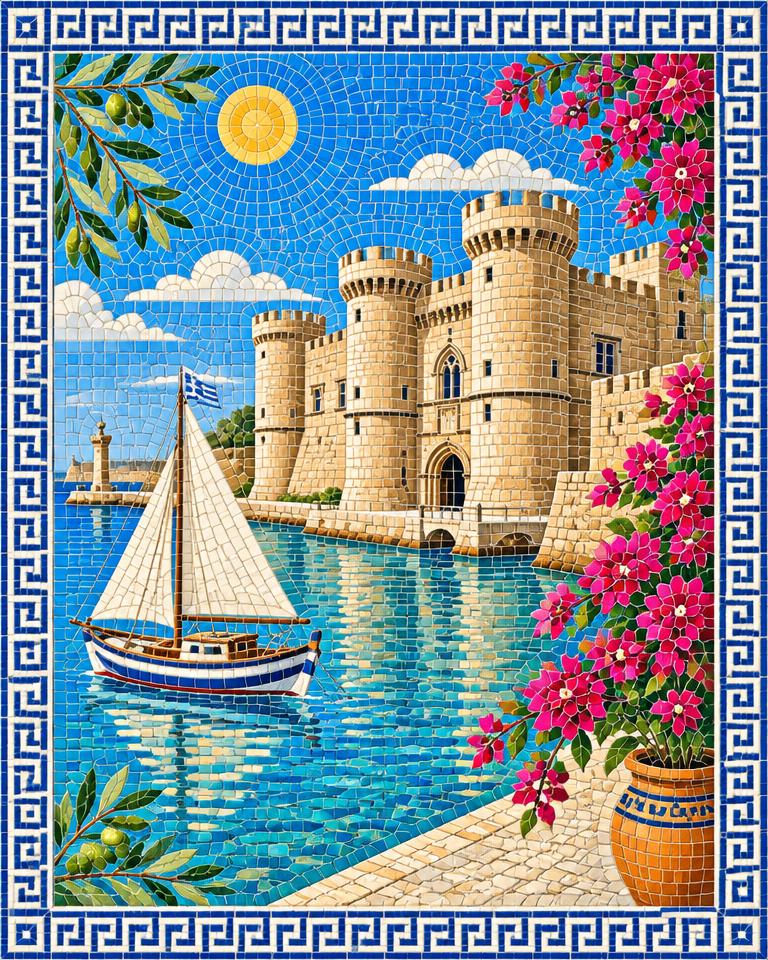
Rhodes layers ancient Greek sanctuaries, a remarkably preserved medieval city and long beach days. The Knights of St John ruled here from 1309 to 1522, leaving mighty walls, the cobbled Street of the Knights and the Palace of the Grand Master inside the UNESCO-listed old town. South along the coast, Lindos rises above whitewashed village lanes and sheltered bays, crowned by an acropolis with the Temple of Athena Lindia. Back at Mandraki harbour, imagine the ancient Colossus of Rhodes nearby—its exact location remains uncertain—then settle into a courtyard taverna for island cooking.

Top 3 to see

  1. I.Palace of the Grand Master

    Knights' palace 14th c.; restored 1930s

    Fortified palace of the medieval Knights of St John.

  2. II.Lindos Acropolis

    Temple 6th c. BC

    Clifftop sanctuary of Athena above a whitewashed village.

  3. III.Rhodes Old Town & Street of the Knights

    Knights, 1309–1522

    Walled medieval town with cobbled lanes and knights' inns.

Top 3 to eat

  1. I.Pitaroudia

    Island taverna classic

    Crisp chickpea fritters with onion, tomato and herbs.

  2. II.Melekouni

    Ancient Greek wedding treat

    Soft sesame-and-honey bars, traditionally served at weddings.

  3. III.Lacan (Lakan)

    Orthodox Easter pot dish

    Slow-baked meat with chickpeas and wheat in a clay pot.

Mosaic for Naxos
Central AegeanCyclades, Greece

05.Naxos

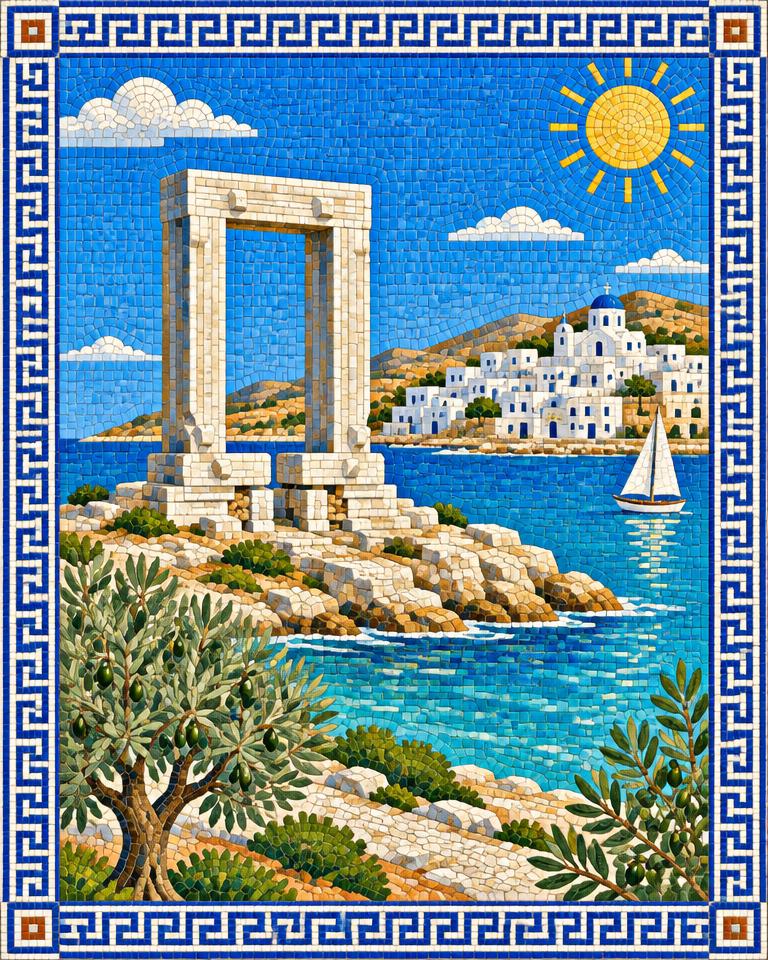
Naxos is the largest Cycladic island, with fertile valleys, marble villages and wide sandy beaches beneath Mount Zas. At the harbour, the Portara is the enormous marble doorway of an unfinished sixth-century BC temple, usually identified with Apollo; walk across its causeway for sunset. Chora's old town climbs to a Venetian castle, while inland Sangri holds the restored marble Temple of Demeter. Explore mountain villages such as Halki and Apiranthos before returning to the sea at Agios Prokopios or Plaka. The island's potatoes, cheeses and citrus liqueur make its tavernas a destination in themselves.

Top 3 to see

  1. I.Portara

    c. 530 BC

    Giant marble doorway of an unfinished ancient temple.

  2. II.Temple of Demeter at Sangri

    c. 530 BC

    Restored sixth-century BC marble sanctuary in farmland.

  3. III.Naxos Chora & Venetian Kastro

    Venetian, 1207–1566

    Whitewashed old-town lanes around a hilltop Venetian castle.

Top 3 to eat

  1. I.Graviera Naxou

    Made since 1700s; PDO 1996

    Rich local cheese, made mainly from cow's milk.

  2. II.Naxos potatoes

    Grown since 1800s

    Prized island-grown potatoes, especially good fried or roasted.

  3. III.Kitron liqueur

    Distilled since 1800s

    Local citrus spirit distilled from citron-tree leaves.

Mosaic for Corinth
Southern GreecePeloponnese, Greece

06.Corinth

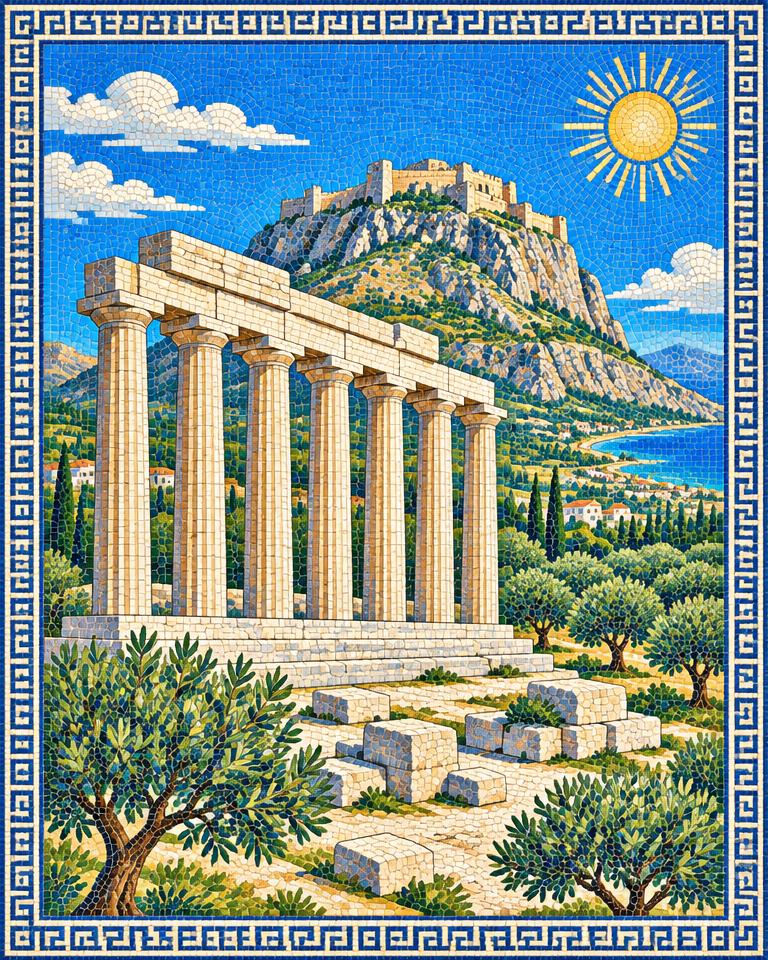
Corinth controlled the narrow land bridge between mainland Greece and the Peloponnese, growing wealthy through trade across two seas. At Ancient Corinth, south-west of the modern city, seven standing columns mark the sixth-century BC Temple of Apollo, beside the Roman forum, Peirene Fountain and the bema associated with the apostle Paul. Above the ruins, Acrocorinth's vast fortress preserves layers of Byzantine, Frankish, Venetian and Ottoman history, with views across the region. Nearby, the nineteenth-century Corinth Canal cuts dramatically through the isthmus; wine country around Nemea makes a rewarding onward trip.

Top 3 to see

  1. I.Ancient Corinth & Temple of Apollo

    Temple c. 560 BC

    Ancient city ruins with seven surviving Doric temple columns.

  2. II.Acrocorinth

    Byzantine 10th–12th c.

    Huge mountaintop fortress overlooking ancient Corinth.

  3. III.Corinth Canal

    Opened 1893

    Narrow nineteenth-century ship canal through the rocky isthmus.

Top 3 to eat

  1. I.Corinthian currants

    Medieval trade, 13th c.

    Tiny sweet dried grapes grown in the region.

  2. II.Manaki olives

    Ancient groves

    Local olives known for their aromatic olive oil.

  3. III.Nemea Agiorgitiko wine

    Ancient Nemean vineyards

    Local red wine from nearby Nemea's Agiorgitiko grapes.

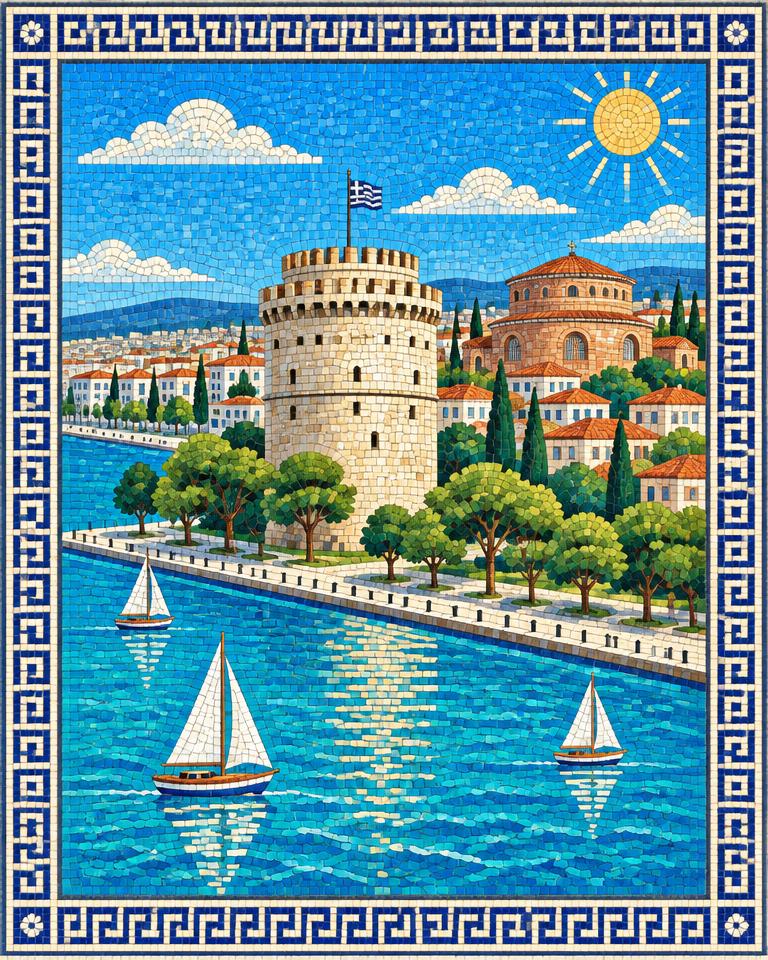
Mosaic for Thessaloniki
Northern GreeceMacedonia, Greece

07.Thessaloniki

Founded in 315 BC by Cassander and named for his wife, Alexander the Great's half-sister, Thessaloniki became a major Roman and Byzantine port. The Arch of Galerius and the massive Rotunda recall its imperial past, while UNESCO-listed Byzantine churches preserve extraordinary mosaics. Follow the waterfront to the Ottoman-era White Tower, then climb into Ano Poli for old lanes, city walls and views over the Thermaic Gulf. The city's Jewish, Ottoman and refugee histories also shaped its markets and kitchens: browse Kapani market and linger over pastries, seafood and lively shared plates.

Top 3 to see

  1. I.White Tower

    Ottoman, c. 1500

    Ottoman waterfront tower with a museum of the city's history.

  2. II.Rotunda & Arch of Galerius

    Roman, c. 300 AD

    Roman imperial monuments; the Rotunda preserves early Christian mosaics.

  3. III.Church of Agios Dimitrios

    Founded 4th–5th c.; rebuilt 1949

    Historic basilica honouring the city's patron saint, with a crypt.

Top 3 to eat

  1. I.Bougatsa

    Byzantine-era pastry

    Flaky pastry with custard or savoury cheese filling.

  2. II.Koulouri Thessalonikis

    Byzantine-era street bread

    Sesame-crusted bread ring, a favourite street breakfast.

  3. III.Trigona Panoramatos

    Invented 1950s

    Syrup-soaked pastry triangles filled with rich cream.

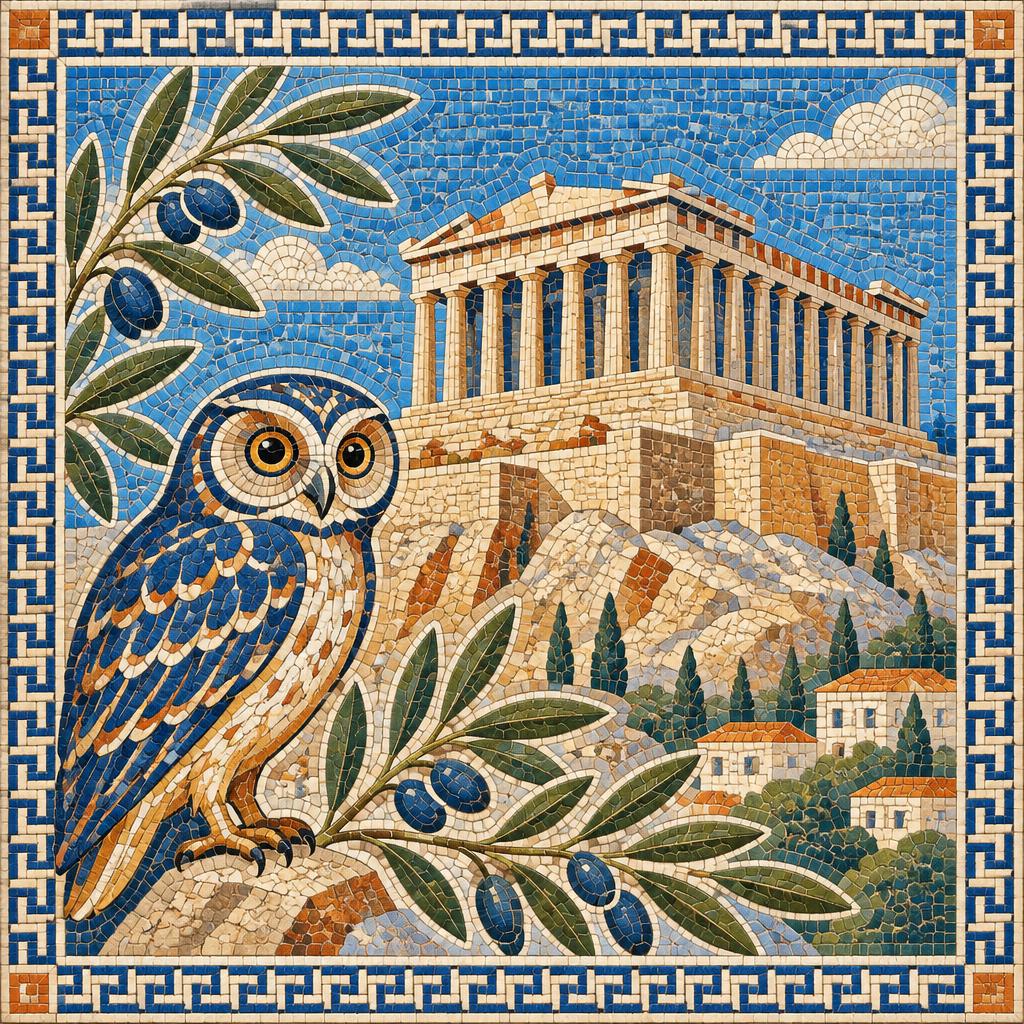
Mosaic for Athens
Central GreeceAttica, Greece

08.Athens

Athens is where democracy, philosophy and theatre took shape. Above the city rises the Acropolis, crowned by the Parthenon, built in 447–432 BC under Pericles and once home to Phidias's gold-and-ivory Athena. Below, the glass-walled Acropolis Museum shows the surviving Caryatids and Parthenon sculptures, while the Ancient Agora marks the market square where Socrates questioned passers-by and the Temple of Hephaestus still stands almost whole. Wander Plaka and Anafiotika for whitewashed lanes, watch sunset from Lycabettus Hill, and finish in Psyrri or Koukaki over late-night meze.

Top 3 to see

  1. I.Acropolis & Parthenon

    Parthenon 447–432 BC

    Rock-top sanctuary of Athena with the 5th-century BC temple.

  2. II.Acropolis Museum

    Opened 2009

    Modern museum holding the original Caryatids and Parthenon sculptures.

  3. III.Ancient Agora of Athens

    Temple of Hephaestus c. 415 BC

    Old marketplace of Socrates, with the intact Temple of Hephaestus.

Top 3 to eat

  1. I.Souvlaki

    Ancient skewers; 20th-c. name

    Grilled pork or chicken skewers, often wrapped in pita.

  2. II.Loukoumades

    Ancient Greek, 5th c. BC

    Small fried dough balls drenched in honey and cinnamon.

  3. III.Spanakopita

    Byzantine–Ottoman phyllo

    Crisp filo pie filled with spinach and feta.

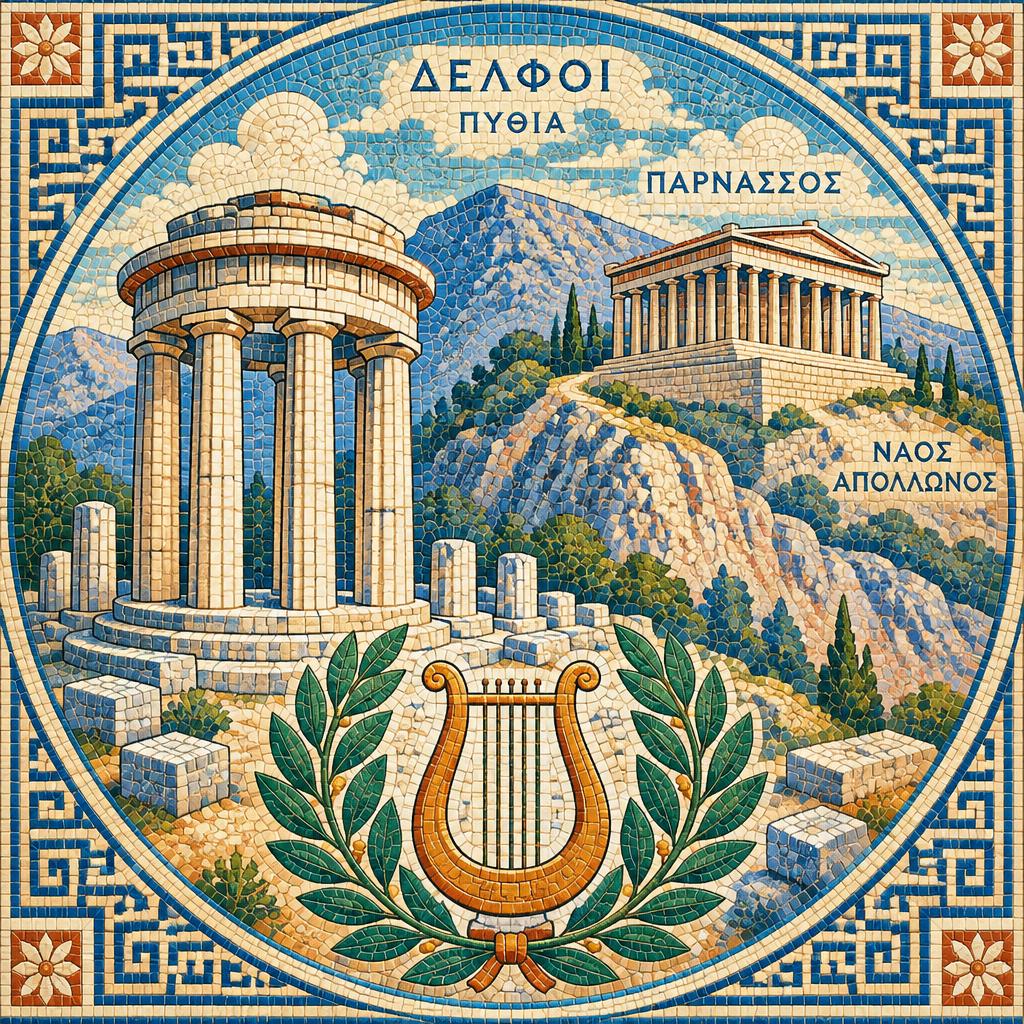
Mosaic for Delphi
Central GreecePhocis, Greece

09.Delphi

The ancient Greeks called Delphi the navel of the world, the spot where two eagles sent by Zeus met. On the slopes of Mount Parnassus, the Pythia, Apollo's priestess, gave the oracles that guided kings and colonies for over a thousand years. Climb the Sacred Way past the rebuilt Athenian Treasury to the Temple of Apollo, the theatre and the high stadium of the Pythian Games. The museum holds the bronze Charioteer of Delphi, and just below lies the Tholos of Athena Pronaia, the round temple in an olive grove. Stay in the mountain village of Arachova for tavernas and views.

Top 3 to see

  1. I.Temple of Apollo Delphi

    Temple 4th c. BC

    Seat of the famous oracle, set on Mount Parnassus.

  2. II.Delphi Archaeological Museum

    Opened 1903

    Home of the bronze Charioteer and temple treasures.

  3. III.Tholos of Athena Pronaia

    c. 370 BC

    Elegant round temple ruin below the main site.

Top 3 to eat

  1. I.Formaela cheese

    Arachova mountain cheese

    Local Arachova sheep's cheese, usually grilled or fried.

  2. II.Kontosouvli

    Easter spit-roast

    Large chunks of pork slow-roasted on a spit.

  3. III.Amfissa olives

    Ancient groves

    Mild, fleshy black olives from the groves below Delphi.

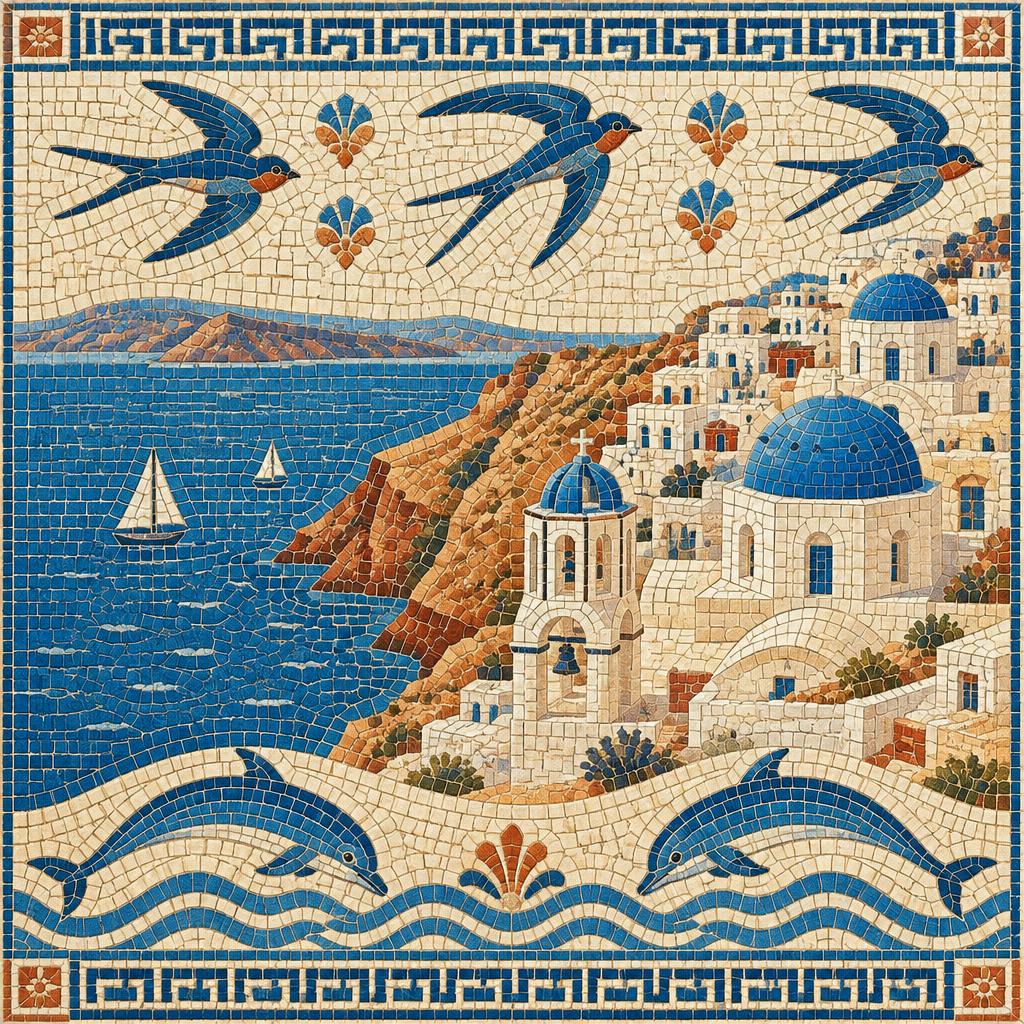
Mosaic for Santorini
Southern AegeanCyclades, Greece

10.Santorini

Santorini is the rim of a volcano that erupted around 1600 BC in one of history's largest blasts, leaving a flooded caldera ringed by 300-metre cliffs. That eruption buried Akrotiri, a Minoan-era town preserved under ash with multi-storey houses and swallow and boxer frescoes, often linked to the Atlantis myth. Today white villages like Oia and Fira cling to the cliff edge with blue-domed churches, while black and red sand beaches line the south. Hike the clifftop path from Fira to Oia, taste volcanic-soil Assyrtiko wines, and catch the famous sunset over the caldera.

Top 3 to see

  1. I.Akrotiri archaeological site

    Buried c. 1600 BC

    Bronze Age town buried by the eruption, kept under a roof.

  2. II.Oia sunset

    Village 19th c.

    Clifftop village famous for blue domes and caldera sunsets.

  3. III.Fira to Oia hike

    Old mule path

    Roughly 10 km caldera-edge trail between the two villages.

Top 3 to eat

  1. I.Tomatokeftedes

    20th-c. island recipe

    Fritters of Santorini's small, sweet cherry tomatoes.

  2. II.Fava Santorinis

    Ancient Greek dish; PDO 2009

    Silky yellow split-pea purée with onions and capers.

  3. III.Assyrtiko wine

    Vines since antiquity

    Crisp, mineral white wine from vines grown in volcanic soil.

Mosaic for Olympia
Southern GreecePeloponnese, Greece

11.Olympia

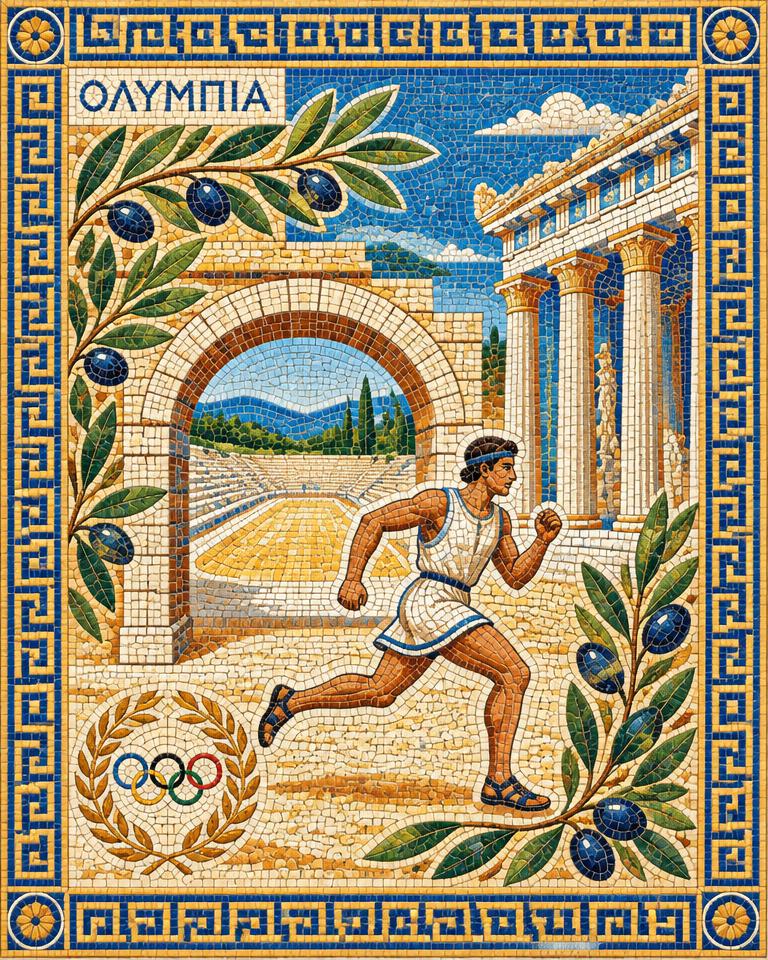
Olympia was the sanctuary of Zeus where the ancient Olympic Games were held every four years from 776 BC until about AD 393. In a green valley where the Alfeios and Kladeos rivers meet, you walk through the stone tunnel into the original 192-metre stadium, past the Temple of Zeus that once held Phidias' gold-and-ivory statue, one of the Seven Wonders. The Olympic flame for every modern Games is still lit here at the Temple of Hera. The museum holds the Hermes of Praxiteles and the sculptures from the Temple of Zeus, and Phidias' own workshop still stands beside the site.

Top 3 to see

  1. I.Ancient Olympia stadium

    Stadium c. 350 BC; Games from 776 BC

    Walk the vaulted tunnel and run the original 192 m track.

  2. II.Temple of Zeus Olympia

    Built c. 470–456 BC

    Toppled giant columns of the temple that held a Wonder.

  3. III.Archaeological Museum of Olympia

    Finds c. 3000 BC–AD 600

    Hermes of Praxiteles and the temple's pediment sculptures.

Top 3 to eat

  1. I.Kontosouvli

    Village spit-roast tradition

    Big chunks of pork slow-turned over charcoal.

  2. II.Peloponnese olive oil

    Groves since antiquity

    Peppery green Koroneiki oil; victors were crowned with olive.

  3. III.Diples

    Byzantine-era festive sweet

    Thin fried dough rolls drizzled with honey and walnuts.

Mosaic for Mycenae
Southern GreecePeloponnese, Greece

12.Mycenae

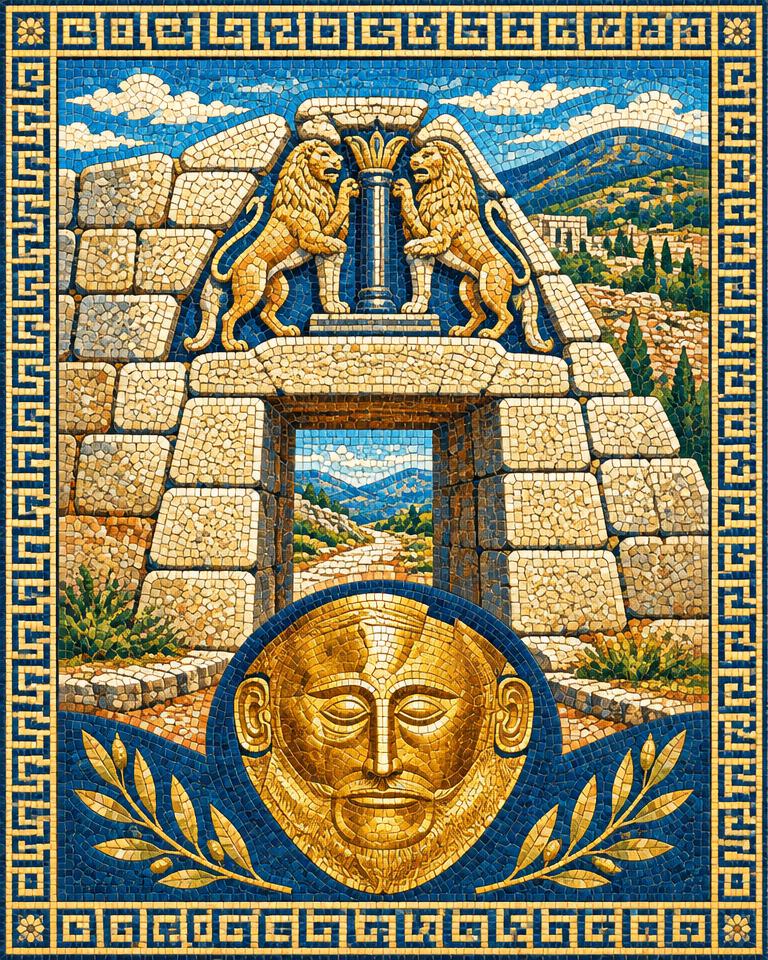
Mycenae was the hilltop citadel of Agamemnon in Homer's Iliad and the centre of the Bronze Age civilisation that gave its name to an era. Its Cyclopean walls are built of boulders so large later Greeks thought only giants could have moved them. You enter through the Lion Gate of about 1250 BC, the oldest monumental sculpture in Europe, and pass Grave Circle A, where Heinrich Schliemann found the gold 'Mask of Agamemnon' in 1876. Just below, the Treasury of Atreus is a vast beehive tomb with a corbelled dome unmatched for a thousand years. Nearby Nafplio makes a lovely base.

Top 3 to see

  1. I.Lion Gate Mycenae

    Mycenaean, c. 1250 BC

    Two carved lions guard the main gate in the giant walls.

  2. II.Treasury of Atreus

    c. 1250 BC

    Huge beehive tomb with a 13 m stone dome.

  3. III.Grave Circle A

    16th c. BC; dug 1876

    Royal shaft graves where Schliemann found the gold mask.

Top 3 to eat

  1. I.Nemea Agiorgitiko wine

    Vines since antiquity

    Soft, dark red wine from vineyards just over the hills.

  2. II.Argolida oranges

    Groves 19th c. onward

    Sweet oranges from the plain below the citadel.

  3. III.Gogges pasta

    Peloponnese village tradition

    Little hand-pressed pasta with tomato and grated cheese.

Mosaic for Aegina
Central GreeceSaronic Gulf, Greece

13.Aegina

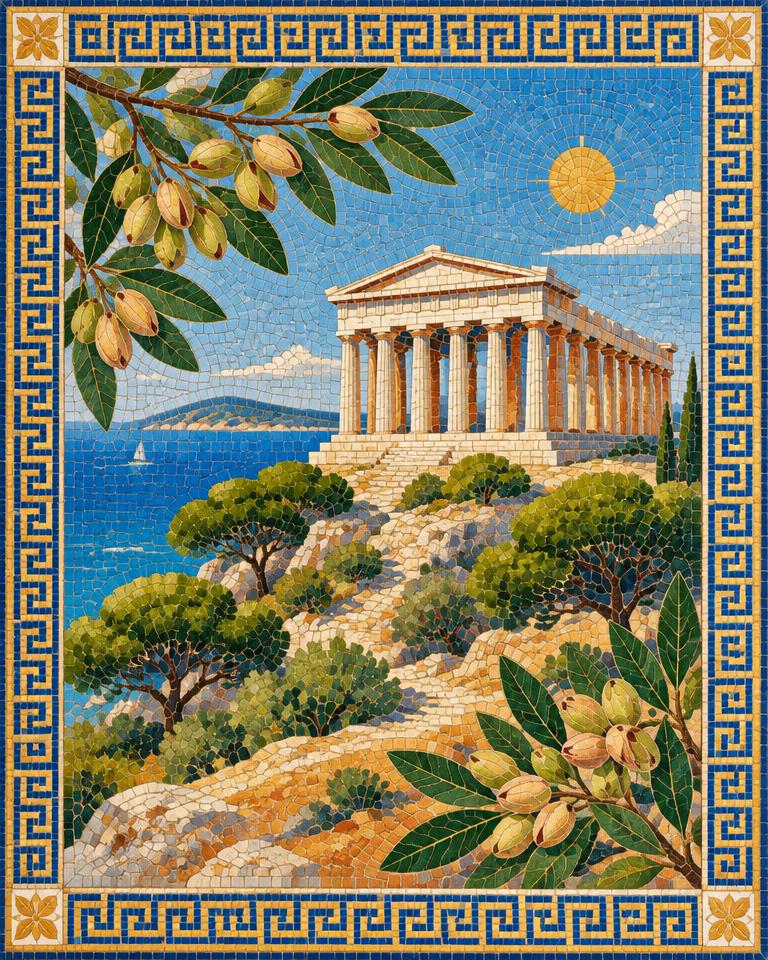
Aegina sits just over an hour by ferry from Athens and was once a sea power rival to Athens, minting some of the first coins in Europe, the silver 'turtles', around 600 BC. On a pine-covered ridge stands the Temple of Aphaia from about 500 BC, one of the best preserved Doric temples in Greece, which forms a near-perfect triangle with the Parthenon and Sounion. It was briefly the first capital of modern Greece in 1828. Explore the ghostly Byzantine hill town of Paleochora with dozens of small chapels, stroll the harbour of neoclassical houses, and taste the island's famous pistachios.

Top 3 to see

  1. I.Temple of Aphaia

    Archaic, c. 500 BC

    Well-preserved Doric temple on a pine-clad hill.

  2. II.Paleochora Aegina

    Byzantine, 9th–19th c.

    Abandoned hill town scattered with tiny frescoed chapels.

  3. III.Kolona Aegina

    Settled c. 3000 BC

    One standing column of Apollo's temple by the harbour.

Top 3 to eat

  1. I.Aegina pistachios

    Grown since 1860s; PDO 1996

    Small, rich, roasted pistachios famous across Greece.

  2. II.Grilled octopus

    Island seafood tradition

    Sun-dried octopus charred on the grill by the harbour.

  3. III.Pistachio spoon sweet

    Ottoman-era preserve style

    Sweet pistachio preserve, served with water and coffee.

Mosaic for Delos
Central AegeanCyclades, Greece

14.Delos

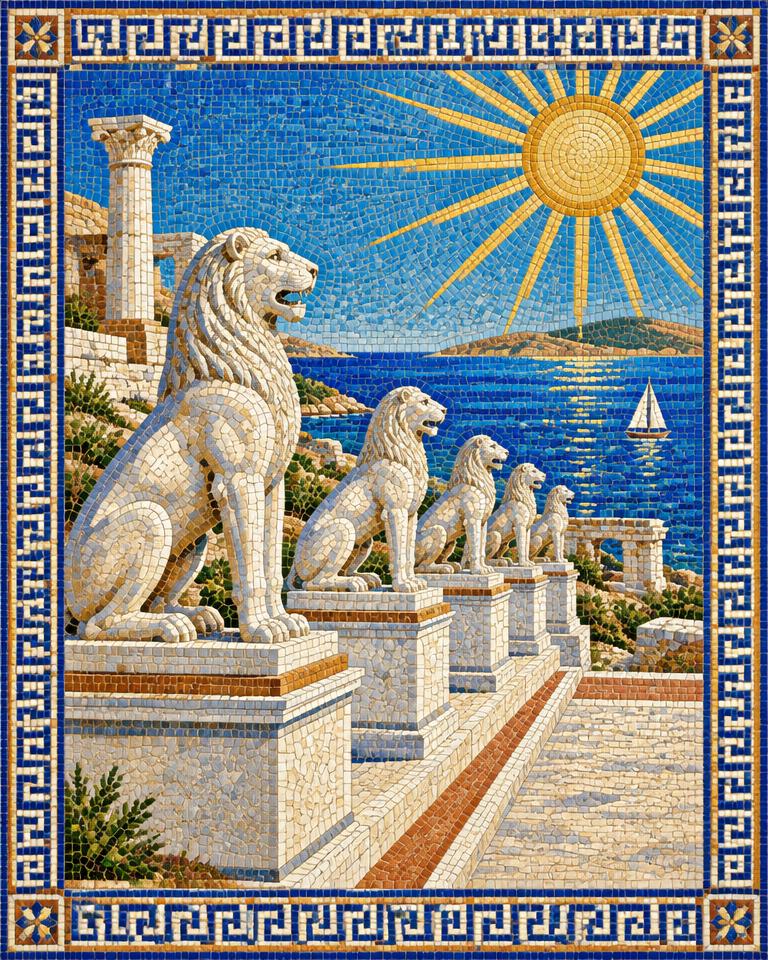
Delos is the tiny, sacred island where myth says Apollo and Artemis were born, and for centuries no one was allowed to be born or die there. It became the religious heart of the Aegean and later a booming free port of perhaps 30,000 people around 100 BC. Today the whole island is an open-air archaeological site reached by boat from Mykonos. Walk the Sacred Way to the Terrace of the Lions, see colourful floor mosaics in the House of Dionysus and House of the Dolphins, and climb Mount Kynthos for views across the Cyclades. No one stays overnight, so go early.

Top 3 to see

  1. I.Terrace of the Lions Delos

    Naxian, c. 600 BC

    Row of marble lions guarding the sacred lake.

  2. II.House of Dionysus Delos

    Hellenistic, 2nd c. BC

    Mosaic floor of Dionysus riding a panther.

  3. III.Mount Kynthos

    Sanctuaries from 3rd c. BC

    Short climb to hilltop shrines and a Cyclades panorama.

Top 3 to eat

  1. I.Kopanisti cheese

    Cycladic tradition; PDO 1996

    Peppery, tangy spreadable cheese from Mykonos.

  2. II.Louza

    Island curing tradition

    Spiced cured pork loin, a Mykonos speciality.

  3. III.Amygdalota

    Ottoman-era sweet

    Soft almond cookies dusted in sugar.

Mosaic for Patmos
Southeast AegeanDodecanese, Greece

15.Patmos

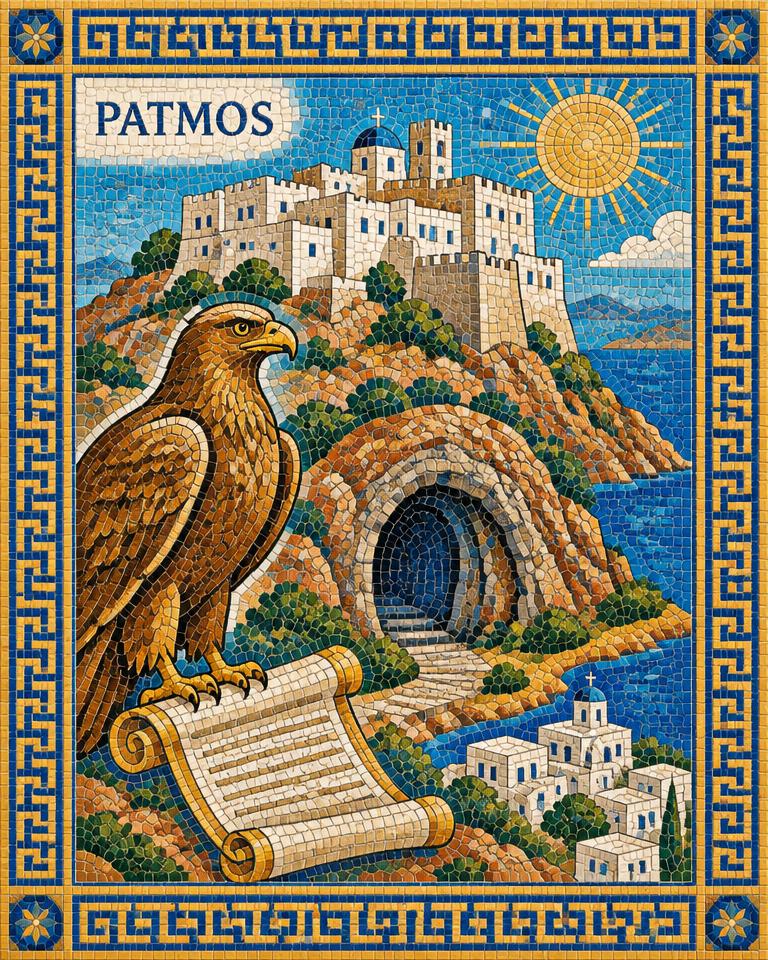
Patmos is the small island where John was exiled by the Romans around AD 95 and, by tradition, received the visions recorded in the Book of Revelation. You can visit the Cave of the Apocalypse, where the rock is said to be split by the voice of God, halfway up the hill. At the top, the Monastery of Saint John the Theologian, founded in 1088, looks like a fortress with battlements over the white hill town of Chora. Its treasury holds Byzantine icons and manuscripts. Both are UNESCO World Heritage. Below, quiet bays like Psili Ammos and Lambi give the island a peaceful, unhurried feel.

Top 3 to see

  1. I.Cave of the Apocalypse

    Revelation c. AD 95

    Grotto where John is said to have received his visions.

  2. II.Monastery of Saint John the Theologian

    Founded 1088

    Fortress monastery with icons, frescoes and old manuscripts.

  3. III.Chora Patmos

    Built 16th–17th c.

    White hill town of captains' mansions with windmills.

Top 3 to eat

  1. I.Patmian cheese pie

    Island Easter tradition

    Sweet-savoury cheese pie in a fluted pastry crust.

  2. II.Pougia

    Dodecanese pastry

    Little pastry pouches filled with nuts and honey.

  3. III.Fresh grilled fish

    Fishing island tradition

    Catch of the day grilled at a harbour taverna in Skala.

Mosaic for Corfu
Western GreeceIonian Islands, Greece

16.Corfu

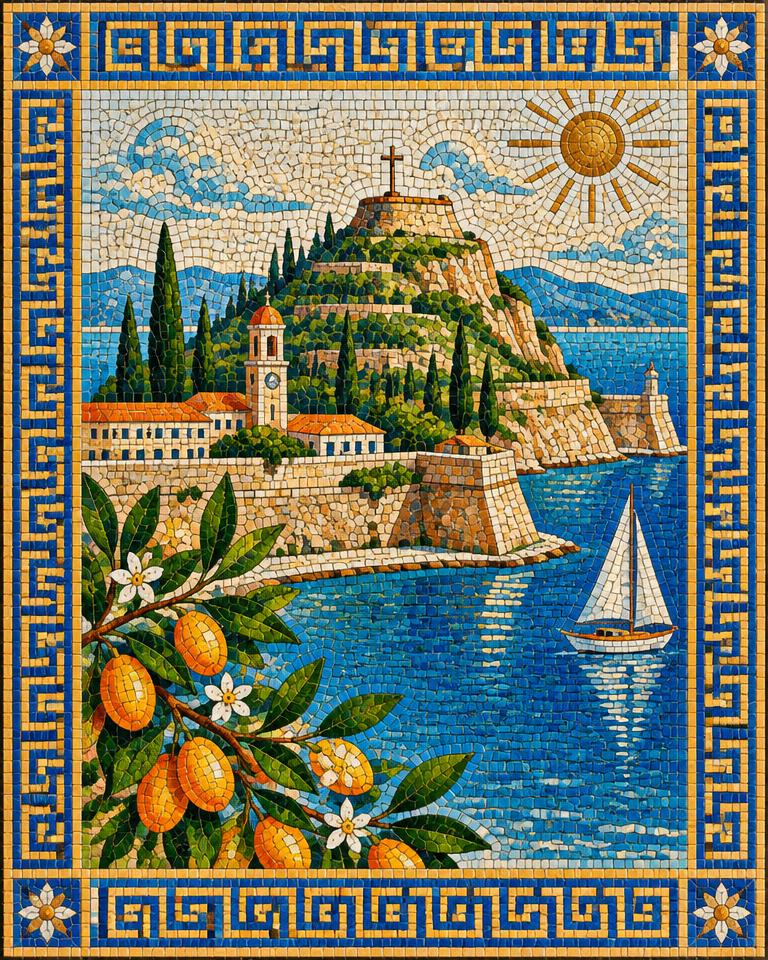
Corfu is the green, cypress-covered island many believe was Homer's Scheria, where Odysseus washed ashore and met Nausicaa. It was ruled by Venice for four centuries and never fell to the Ottomans, so its UNESCO-listed old town feels Italian, with arcaded streets, the Liston promenade and cricket played on the Spianada square. Two Venetian fortresses frame the town, and the Achilleion palace built for Empress Sisi in 1890 sits in the hills. Swim at the coves of Paleokastritsa, take a boat to Mouse Island, and taste dishes found nowhere else in Greece.

Top 3 to see

  1. I.Old Fortress Corfu

    Venetian, 15th–16th c.

    Sea fortress on a twin-peaked headland beside the old town.

  2. II.Achilleion Palace

    Built 1890

    Empress Sisi's palace and gardens dedicated to Achilles.

  3. III.Paleokastritsa

    Monastery 1225

    Turquoise coves under a clifftop monastery.

Top 3 to eat

  1. I.Pastitsada

    Venetian-era dish

    Rooster or beef in spiced tomato sauce over pasta.

  2. II.Sofrito

    Venetian-era dish

    Veal slices in white wine, garlic and parsley sauce.

  3. III.Kumquat liqueur

    Kumquats brought c. 1860

    Bright orange sweet liqueur unique to Corfu.