 Back to the Atlas
1. Athens, Greece: A rich history
Athens lies in the basin of Attica, between mountains and the Saronic Gulf. Its Acropolis was inhabited long before the marble temples: prehistoric settlement and Mycenaean fortifications preceded the city of philosophers. The hill’s name simply means “high city,” which is reassuringly literal for a place that has inspired so much lofty thinking.
In the sixth century BC, Solon’s reforms and the rule of Peisistratos reshaped civic life. The reforms of Cleisthenes in 508/507 BC laid foundations for Athenian democracy. This was direct government by male citizens, not universal suffrage: women, enslaved people and resident foreigners were excluded. Its innovations matter, but so do its limits.
Persian forces destroyed much of Athens in 480 BC, including the Acropolis sanctuaries. After the Greek victories, Athens became the leading power of the Delian League. Under Pericles, wealth and imperial tribute helped fund the great building programme. The Parthenon was constructed in 447–438 BC, with sculpture and decoration continuing to about 432 BC; the surrounding monuments made the hill a showcase for Athena and the city itself.
The fifth century also produced the plays of Aeschylus, Sophocles and Euripides and the questioning of Socrates. War with Sparta from 431 to 404 BC ended in Athens’ defeat. Plato and Aristotle worked in the following century, while Macedonian victory at Chaeronea in 338 BC reduced the city’s political independence without extinguishing its intellectual life.
Under Rome, Athens remained a prestigious centre of learning. Sulla’s forces sacked the city in 86 BC; later benefactors rebuilt and expanded it. Emperor Hadrian completed the enormous Temple of Olympian Zeus in AD 131/132. The Herulian raid of AD 267 damaged the city, but life continued through late antiquity. Christian Athens gradually transformed its pagan sanctuaries, and the Parthenon became a church during the early medieval period.
Frankish rule followed the Fourth Crusade, and Ottoman forces took the lower city in 1456 and the Acropolis in 1458. In 1687, a Venetian bombardment ignited gunpowder stored in the Parthenon, devastating the building. Athens became the capital of modern Greece in 1834; the first modern Olympic Games in 1896 and the Games of 2004 are later chapters in a city whose ancient monuments now stand amid a very modern metropolis.
2. The Acropolis, Agora & old-town lanes
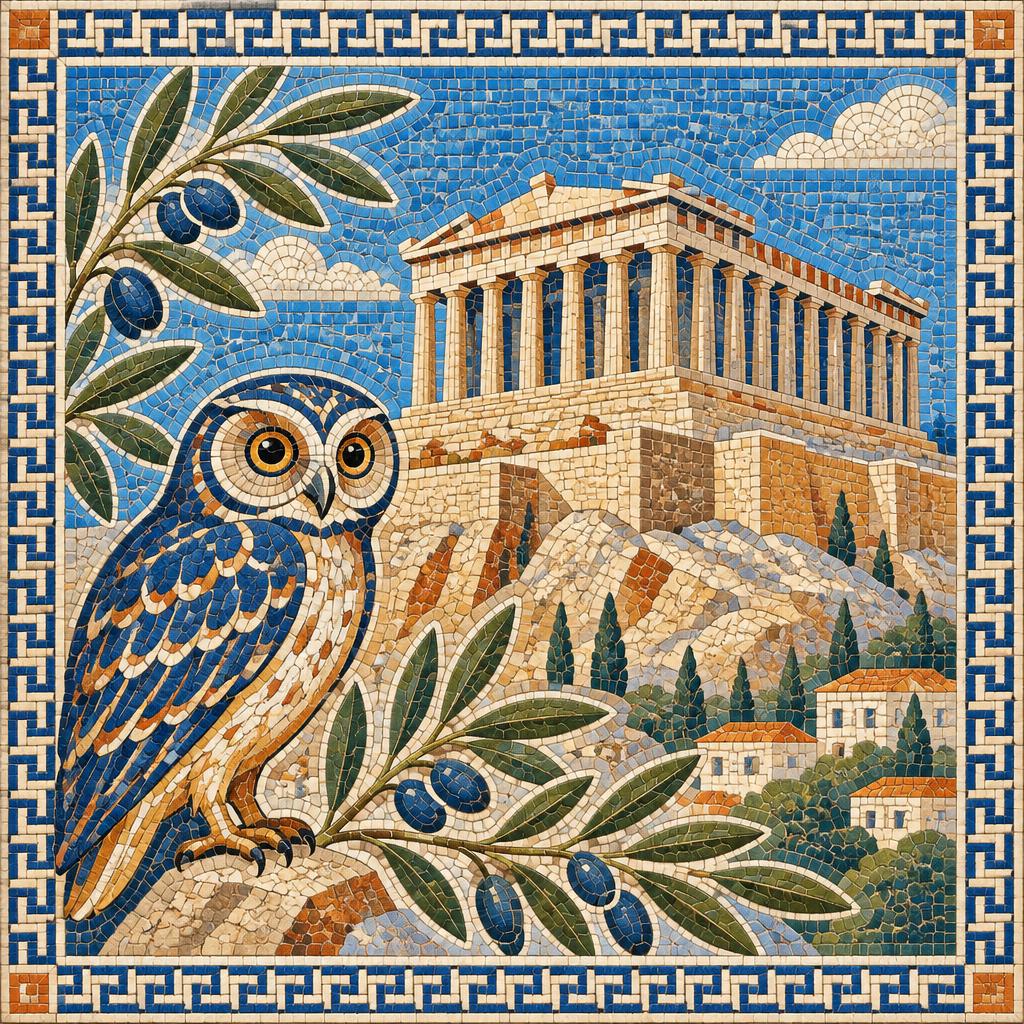
Begin early on the Acropolis, where the Parthenon, Erechtheion and Propylaea make more sense as a connected sanctuary than as separate photo stops. The Acropolis Museum holds original sculptures, including five of the six surviving Caryatids from the Erechtheion. The figures on the hill are copies; the originals have sensibly moved indoors.
West of the hill, the Ancient Agora was the civic and commercial heart of Athens. Its well-preserved Temple of Hephaestus and reconstructed Stoa of Attalos frame a landscape of courts, council buildings, shrines and everyday transactions. Democracy needed meeting places, but it also needed lunch.
The Roman Agora lies just east of the older square. Built with funds from Julius Caesar and Augustus in the later first century BC, it shifted the city's markets into the Roman era; its Turkish-era Fethiye Mosque now shares the site, and the nearby Tower of the Winds — a marble sundial, weather vane and water clock — predates it by a century or so.
Follow pedestrian streets into Plaka and the tiny lanes of Anafiotika, then continue toward Syntagma and the National Garden. Beyond are the Olympieion and Panathenaic Stadium. The illustrated atlas above places the main sights in a storybook cityscape; use the Google Maps links for street routes and real walking distances.
3. Top historical sights
Parthenon 447–438 BC; decoration to c. 432 BC
The hilltop sanctuary of Athena, with the Parthenon, Erechtheion and monumental gateway. Book current entry arrangements before visiting.
Civic centre from 6th c. BC; Hephaestus temple 5th c. BC
Public life, philosophy and commerce below the Acropolis; the reconstructed Stoa of Attalos houses the site museum.
Funded by Caesar and Augustus, late 1st c. BC; Tower of the Winds c. 2nd–1st c. BC
The Roman-era market east of the Ancient Agora, framed by the Gate of Athena Archegetis and watched over by the marble Tower of the Winds.
Opened 2009; collections from the ancient sanctuary
Original Caryatids, archaic statues and Parthenon sculptures, with ancient neighbourhood remains beneath the building.
Begun 515 BC; completed AD 131/132
Towering Corinthian columns of a sanctuary completed under Hadrian, beside his monumental arch.
Stadium 330/329 BC; marble rebuilding c. AD 140–144; restored for 1896
The white-marble horseshoe hosted the first modern Olympics, on the site of an ancient stadium.
Natural hill; summit chapel 19th century
A panoramic viewpoint northeast of the Acropolis, reached by foot or funicular. Save your climb for cooler hours.
4. The Athenian table: what to eat
Modern Greek street-food staple
Grilled skewers or a pita wrap with meat, tomato and sauce. Athens offers plenty of opinions on the best version; tasting is the diplomatic response.
Greek pie tradition shaped by centuries of regional cooking
Crisp filo with spinach, herbs and feta, ideal from a busy neighbourhood bakery.
Long-standing eastern Mediterranean fried-dough tradition
Small fried dough balls with honey or syrup and cinnamon. Modern toppings multiply, but the classic needs no improvement.
Shared-table Greek tradition
Order small dishes of beans, grilled fish, cheese and horta with lemon and olive oil; let the season, not a fixed menu, lead.
5. Explorer’s conclusion
Allow three days: the Acropolis and museum on the first, the Agora and old-town lanes on the second, and the Roman monuments, stadium and a viewpoint on the third. Keep time for a neighbourhood beyond the monuments, such as Koukaki or Pangrati, and a leisurely meal rather than a race through every ruin.
Spring and autumn are often kinder to walkers than midsummer. Bring water and sun protection; polished stone on the Acropolis can be slippery. Check official opening times and tickets before setting out. Athens rewards curiosity at street level as much as admiration from a hilltop: the ancient city is extraordinary, but the living one is half the adventure.
Site by Dan Vineyard — images and site © 2026