 Back to the Atlas
1. Delos, Greece: A rich history
In Greek myth, Leto gave birth to Apollo and Artemis on Delos. Archaeology reveals settlement from the third millennium BC and a sanctuary that became an important gathering place for the Aegean’s Ionian communities. Divine birth certificates remain outside the excavators’ remit.
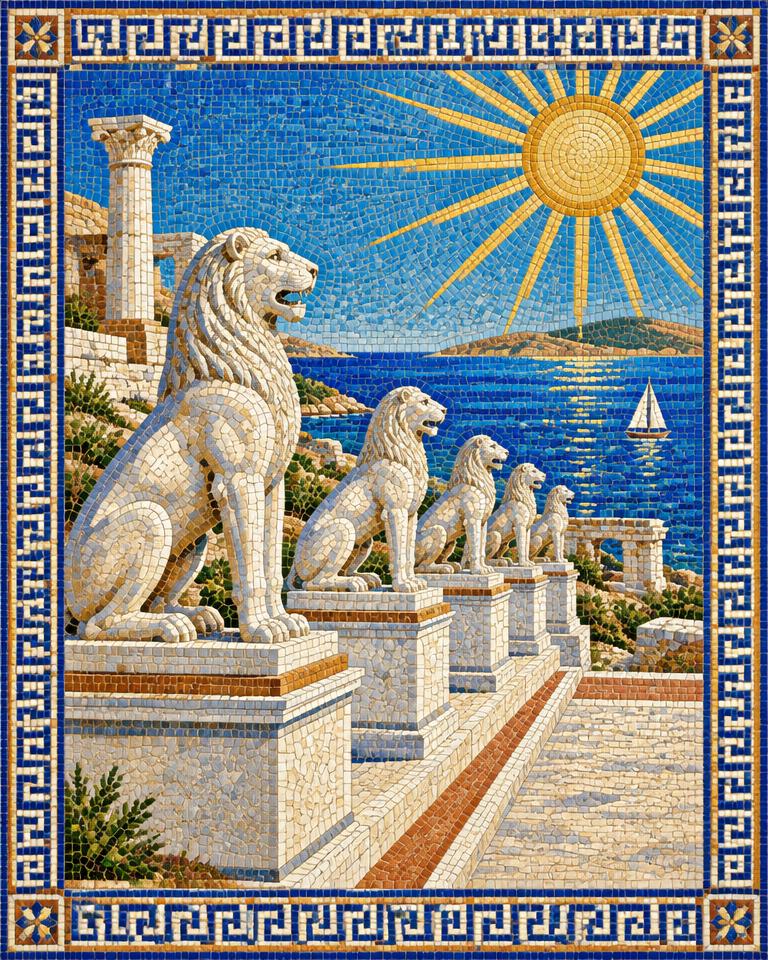
Naxos helped embellish the sanctuary in the seventh and sixth centuries BC, including its famous marble lions. Athens later asserted control: in 426/425 BC the Athenians carried out a ritual purification, removing burials and prohibiting births and deaths on the island; nearby Rheneia served those unavoidable needs. The Delian League, founded in 478 BC, initially kept its treasury here before Athens transferred it in 454 BC.
After a period of independence beginning in 314 BC, Delos returned to Athenian administration in 167/166 BC under Roman authority and became a free port. Merchants from across the Mediterranean established houses, shrines and businesses; enslaved people were among the commodities traded. Population estimates around 100 BC sometimes reach 30,000, but ancient headcounts are not precise censuses.
Attacks in 88 and 69 BC devastated the trading city, and changing commercial routes reduced its importance. Excavations by the French School at Athens began in 1873. Today the UNESCO-listed island preserves temples and ordinary houses together, making it possible to see both public religion and the private display of considerable wealth.
2. The Sacred Way & the mosaic houses
From the landing place, follow the sanctuary routes towards the Terrace of the Lions. The animals outside are replicas; surviving originals are protected in the museum. Their gaze faces the area of the Sacred Lake, now drained, rather than a convenient modern watering hole.
Continue into the residential quarters for the House of Dionysus and House of the Dolphins, where mosaic floors show what prosperous Hellenistic households valued. Finish with Mount Kynthos if conditions and access allow: its rocky ascent leads past sanctuary remains to a wide Cycladic view, with very little shade to interrupt it.
3. Top historical sights
The archaeological site rewards a planned circuit rather than a race between monuments.
Naxian dedication, late 7th–early 6th century BC
Marble lions guarded the sacred precinct beside the lake, with replicas now standing outdoors.
Hellenistic, 2nd century BC
A mosaic of Dionysus riding a panther anchors one of the island’s most memorable private houses.
Hellenistic sanctuaries, including 3rd century BC remains
A rocky climb leads to hilltop sanctuary remains and a panorama across the Cyclades.
Late 2nd century BC
Dolphin mosaics bring a maritime flourish to a wealthy household’s courtyard.
4. The Mykonos-side table: what to eat
Plan meals on Mykonos before or after the crossing: Delos has essentially no tavernas, and refreshments should not be assumed.
Cycladic tradition; PDO registered 1996
This peppery, tangy spreadable cheese makes a forceful start to a Mykonos lunch.
Traditional island pork curing
Spiced cured pork loin is a Mykonos speciality best ordered thinly sliced.
Long-established Aegean almond-sweet tradition
Soft almond sweets dusted with sugar provide a small reward after a dusty island walk.
5. Explorer's conclusion
Take an early boat from Mykonos and confirm the return sailing, weather conditions and current visitor arrangements before leaving. Bring water, sun protection and shoes suited to uneven stone; allow several hours and keep the return boat firmly in mind. Ordinary visitors cannot stay overnight.
Delos is unusually good at making a vanished city legible: sanctuary, marketplace, dining room, sea. The marble lions get the photographs, but the doorways and household floors make the place feel inhabited, even when everyone must leave by boat.
Site by Dan Vineyard — images and site © 2026