 Back to the Atlas
1. Delphi, Greece: A rich history
Ancient Greeks called Delphi the navel of the world. In myth, two eagles released by Zeus met here, marking the earth's centre; the omphalos stone expressed that sacred claim. It was religious geography, not a result from a surveying expedition.
On the slopes of Mount Parnassus, Apollo's sanctuary developed into a major religious centre from the eighth century BC onward. The Pythia, Apollo's priestess, delivered responses sought by individuals and communities considering matters from religious observance to colonisation and war. The procedures and explanations for her inspiration remain subjects of debate.
Delphi was also a place of competition and public display. The Pythian Games were reorganised in the sixth century BC, with a four-year cycle traditionally dated from 582 BC, while cities dedicated treasuries and monuments advertising their wealth and victories. Sacred ground did not eliminate political rivalry; it gave it rather handsome architecture.
The sanctuary remained important under Roman rule, although its influence changed over time and declined in late antiquity as Christianity gained imperial support. French-led excavations beginning in 1892 followed the relocation of the village of Kastri, revealing much of the sanctuary visitors explore today. The Great Excavation also recovered objects now displayed in the museum.
2. The Sacred Way & Athena Pronaia
Follow the Sacred Way uphill past votive monuments and the reconstructed Athenian Treasury to the Temple of Apollo. Its visible remains belong mainly to the fourth-century BC rebuilding after an earlier temple was destroyed in 373 BC. The theatre rises above it, with the stadium farther uphill when access permits.
The archaeological museum is essential, not an optional shelter from the weather. The bronze Charioteer, dedicated around 478–474 BC, is the best-known exhibit, but sculpture and offerings throughout the galleries explain the sanctuary's wealth and international reach.
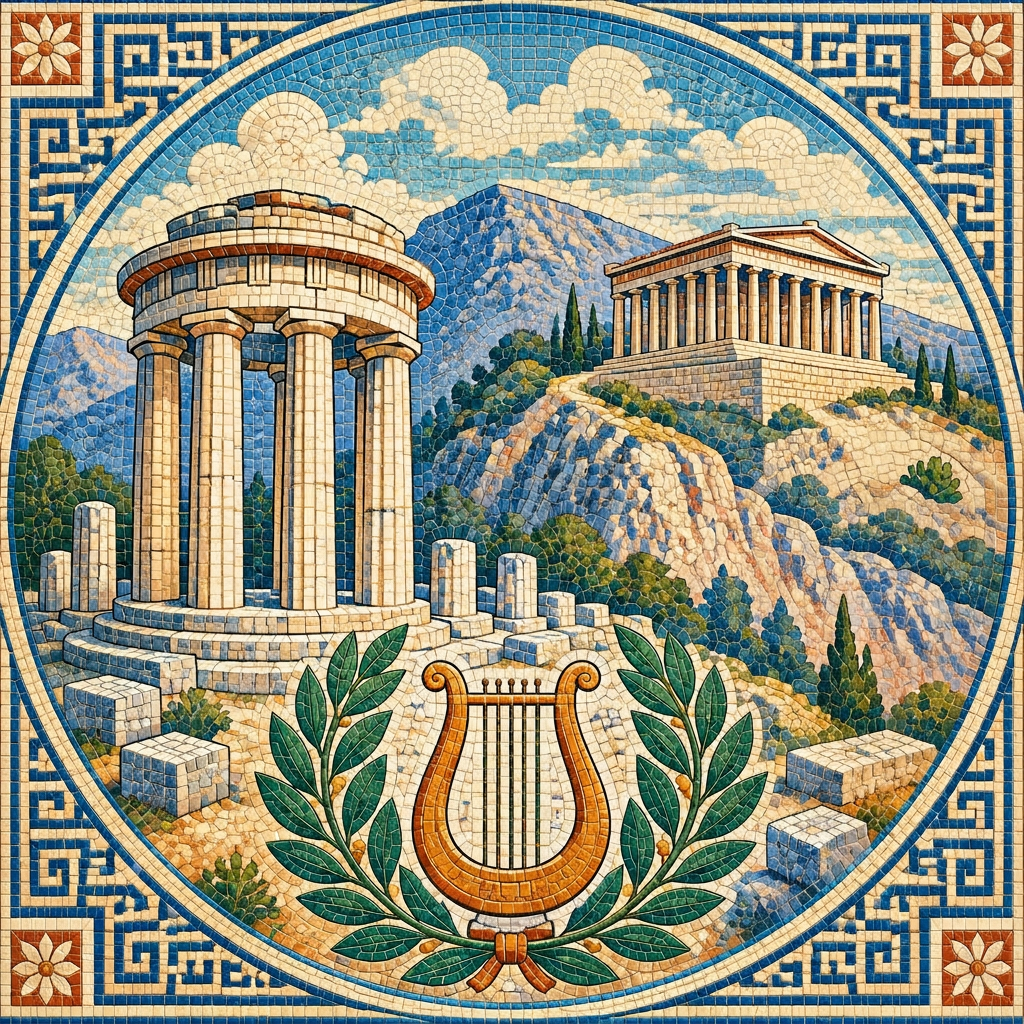
The sanctuary of Athena Pronaia lies separately below the main site. Its circular Tholos, built around 380–370 BC, is Delphi's familiar photographic landmark, though its precise ancient function remains uncertain; the wider landscape opens towards the olive-growing plain below.
3. Top historical sights
Allow time for both sanctuaries and the museum, especially the galleries surrounding the Charioteer of Delphi.
Surviving temple principally 4th century BC
The temple occupied the centre of Apollo's sanctuary and housed the setting for oracular consultation.
Opened 1903; subsequently enlarged and renewed
The museum displays the bronze Charioteer alongside major sculptures and offerings from the sanctuary.
Classical; c. 380–370 BC
This partly reconstructed circular monument stands in a separate sanctuary below Apollo's precinct.
4. The Parnassus table: what to eat
Mountain tavernas around Arachova favour cheese and grilled meat, while the landscape below Delphi belongs to olive country. These are regional food traditions, not a reconstructed menu from Apollo's dining room.
Traditional Arachova cheese; PDO 1996
This firm mountain cheese is particularly good grilled or fried until browned outside.
Traditional spit-roasted meat
Large pieces of pork or other meat turn slowly over coals, with pork widely available beyond Easter.
Long-established regional olive cultivation
These table olives come from the historic olive-growing landscape below Delphi and around Amfissa.
5. Explorer's conclusion
Stay overnight in Delphi or Arachova to visit without the pressure of an Athens day trip. Start early in hot weather, carry water and wear shoes suited to uneven stone and sustained climbing. Confirm current tickets, opening hours and access to the upper site and Athena Pronaia before setting out.
The most lasting impression may be the setting rather than any single column: pale rock above, olive country below and a sanctuary arranged along the mountainside. Delphi no longer offers official answers, but it still provides an excellent place to reconsider the questions.
Site by Dan Vineyard — images and site © 2026