 Back to the Atlas
1. Rhodes, Greece: The island of the sun
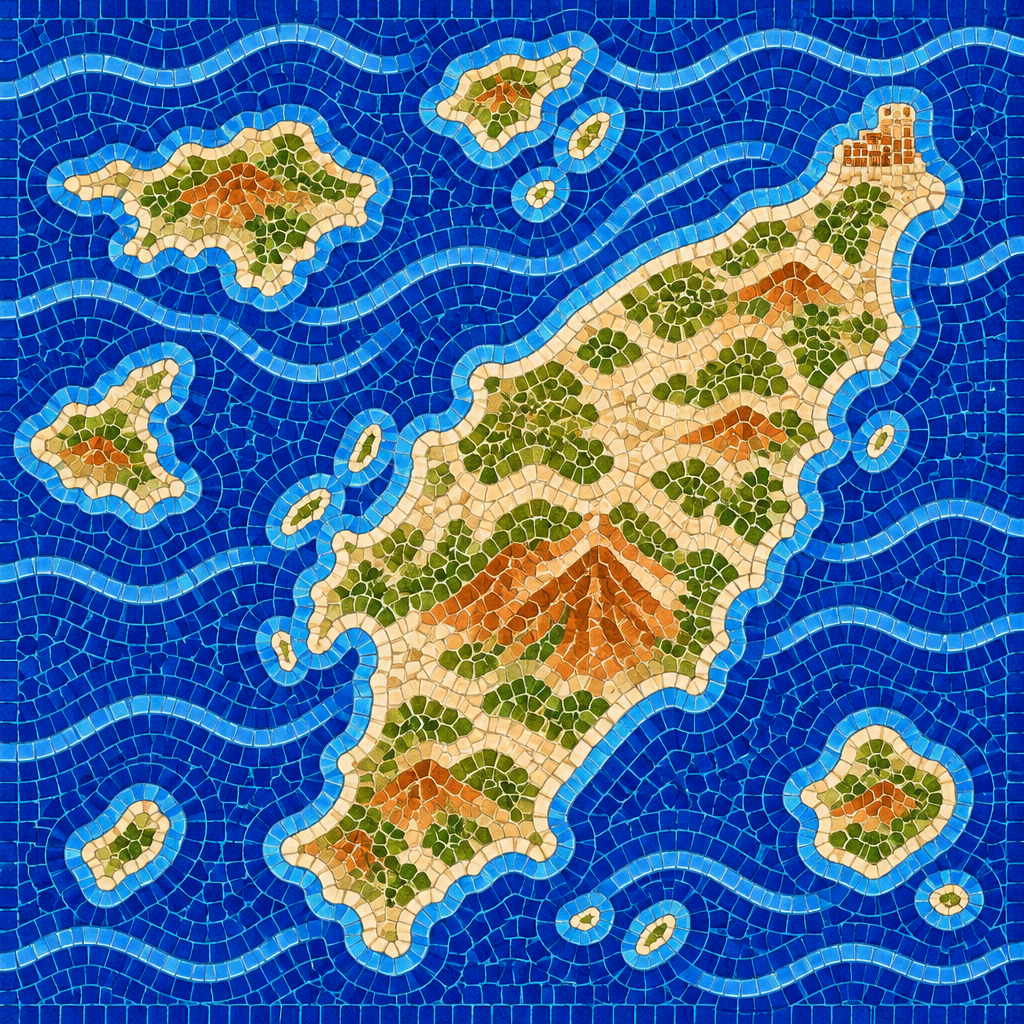
Rhodes is a collision of ancient myth, Crusader history and pristine Aegean beaches. Legend made it the personal domain of the sun god Helios — an arrangement that has held up well, since the island still sees sun for some 300 days a year — and in 408 BC the island's three cities joined to found a new capital on a grid plan attributed to Hippodamus of Miletus. It quickly became a maritime and cultural powerhouse of the ancient Mediterranean.
Long before that new capital existed, Rhodes was already a crossroads of the Bronze Age Mediterranean. The settlement at Trianda, near modern Ialysos, had close connections with Minoan Crete in the second millennium BC; Mycenaean pottery and chamber tombs reveal another flourishing chapter by the 14th century BC. In the following centuries, the Greek-speaking cities of Ialysos, Kameiros and Lindosdeveloped their own identities, sanctuaries and trading connections. Lindos was home to Cleobulus, traditionally counted among the Seven Sages of Greece, in the 6th century BC. For an explorer, the ruins of ancient Kameiros make this earlier island tangible: streets, houses and water systems belonging to a world that was old before anyone ordered a giant bronze sun god.
In the Hellenistic age Rhodes was famed for its navy and its trade. Around 280 BC it raised the Colossus — a towering bronze Helios and one of the Seven Wonders of the Ancient World — only for an earthquake to topple it about 54 years later, in 226 BC. The island thrived anyway as a centre of philosophy and art, while the fallen giant lay where it dropped for centuries — Pliny records travellers still crossing the sea to get their arms around its thumb.
The Colossus celebrated a very real escape: Rhodes had withstood the siege of Demetrius Poliorcetes in 305–304 BC, despite his enormous siege engines. Independence then rested on more practical foundations — merchant shipping, naval patrols and diplomacy among rival kingdoms. Rhodian wine amphorae travelled widely, their stamped handles still helping archaeologists trace ancient trade. Alliance with Rome brought mainland territories after the Treaty of Apamea in 188 BC, but Rome was not an especially forgiving business partner. After Rhodes tried to mediate in Rome's war with Macedonia, the Romans stripped away those possessions and made Delos a free port in 167 BC, diverting trade from Rhodes. An unequal alliance followed in 164 BC: the island remained important, but its days of setting the regional agenda were fading.
Roman influence did not erase Rhodes's Greek intellectual life. In the 1st century BC, Cicero studied rhetoric here, while the philosopher Posidonius made the island a centre of learning — Rome could conquer the neighbourhood and still need help with its public speaking. Politics brought harsher visitors too: Cassius captured and plundered Rhodes in 43 BC, during the civil wars after Caesar's assassination. The future emperor Tiberius later lived here from 6 BC to AD 2, and formal incorporation into the Roman provincial system came in AD 74. Trade and artistic life continued, despite a destructive earthquake around AD 142. During the 4th century, Christianity became increasingly prominent across the empire; following the imperial division of AD 395, Rhodes belonged to the eastern Roman world we now call Byzantine. By around AD 400, this was no longer an independent maritime republic, but a Greek-speaking island within a changing, increasingly Christian empire — centuries before the knights arrived.
2. Knights, sultans & Italians
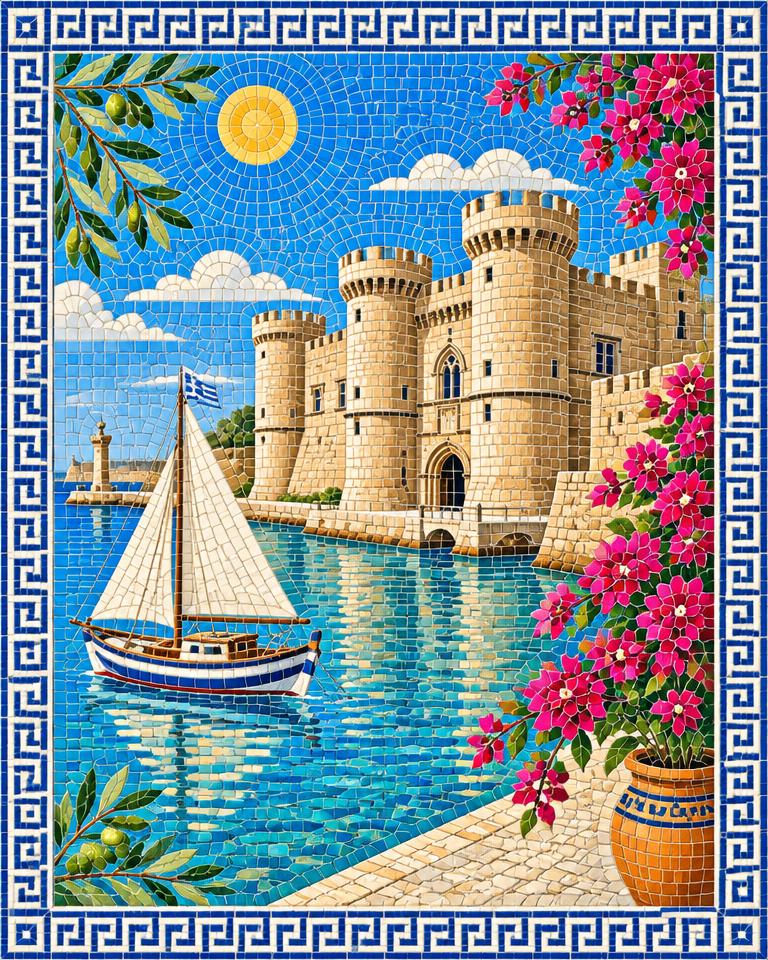
The defining chapter began in 1309, when the Knights Hospitaller took the island. For over two centuries they ran it like a monastery with a navy, building the colossal walls, the cobbled Street of the Knights and the Palace of the Grand Master that still define the UNESCO-listed Old Town.
That era ended in 1522 after a six-month siege by Suleiman the Magnificent. Under nearly four centuries of Ottoman rule, mosques, minarets and bathhouses rose among the Gothic stone. Italy seized Rhodes in 1912 and rebuilt many monuments — sometimes with more enthusiasm than accuracy — and after the Second World War the Dodecanese formally united with Greece in 1947.
3. Top historical sights
14th c. Knights; restored by Italians 1930s
The crown jewel of the medieval city, wrecked by an 1856 gunpowder explosion and theatrically rebuilt by the Italians.
Sanctuary of Athena Lindia, 6th c. BC onward
A clifftop sanctuary above a whitewashed village, with sweeping views over the Aegean.
14th–16th c. Knights Hospitaller
A cobbled street lined with the 'inns' where knights lodged by native language — the medieval equivalent of sorting housemates by accent.
Ancient harbour; deer columns 20th c.
Where the Colossus is popularly (if probably wrongly) imagined straddling the entrance; the bronze deer standing there now are honest understudies.
4. The Rhodian table
Traditional Dodecanese meze
Crisp chickpea fritters with onion, tomato and fresh herbs — the tavern starter that tells you, one bite in, that you are hungrier than you claimed.
Traditional Rhodian wedding sweet
A chewy bar of sesame, thyme honey, almonds and warm spices — still the sweet a Rhodian grandmother will insist you take home.
Orthodox Easter tradition
Meat slow-baked in a clay pot with chickpeas and wheat — Rhodian Easter is cooked in the ground, not the oven.
Local Rhodian home cooking
Handmade pasta boiled in rich meat broth and buried under grated local cheese — a dish never once observed arriving in a small portion.
5. Explorer's conclusion
Rhodes is an island where you can breakfast in a modern café, walk a 14th-century Gothic fortress by morning, climb to a temple of Athena by afternoon, and watch the sun set over the Aegean with a glass of local wine. Bring comfortable shoes, an appetite for history, and respect for the many empires that tried to tame it — every one of them eventually left, and the island did not.
Site by Dan Vineyard — images and site © 2026