 Back to the Atlas
1. Sifnos, Greece: A rich history
Sifnos was prosperous in antiquity through gold and silver mining. Around 525 BC, the islanders dedicated the richly sculpted Siphnian Treasury at Delphi, an exceptionally visible statement of wealth at a sanctuary visited by the wider Greek world.
Herodotus describes both that prosperity and a warning associated with the island’s fortunes. Stories that the sea swallowed the mines as divine punishment belong to the island’s legendary history, not to a securely established explanation for mining decline. Ancient economic fortunes rarely turn on one conveniently moral event.
Kastro occupies the site of the ancient settlement and preserves substantial evidence of later fortified life. Following the fragmentation of Byzantine authority after 1204, Sifnos passed into Latin lordship; the da Corogna family ruled from the early fourteenth century. Its compact streets and defensive outer houses belong to a long-lived settlement rather than a village built from scratch in one medieval campaign.
Ottoman rule followed in the sixteenth century, and Sifnos later joined the independent Greek state. Its modern culinary reputation owes much to Nikolaos Tselementes, born on the island in 1878. He launched a cookery periodical in 1910 and later published influential cookbooks; calling 1910 the date of Greece’s first modern cookbook compresses a more complicated publishing history.
2. Kastro, Chrissopigi and the inland villages
Explore Kastro on foot, watching for ancient architectural fragments reused among medieval and later buildings. Narrow passages, outer walls and sea views explain why this headland remained valuable long after its first inhabitants arrived.
The white monastery of Chrissopigi, founded in 1650, occupies the rocky promontory seen in many of the island’s photographs. It remains a place of worship, so quiet behaviour and suitable clothing matter more than securing the exact postcard angle.
Apollonia and Artemonas offer a different rhythm: lanes, churches, courtyards and handsome houses, including nineteenth-century mansions. Pottery workshops connect the island’s cooking vessels with its enduring craft tradition; claims of an entirely unchanged technique over millennia deserve more caution than a well-made casserole.
3. Top historical sights
Ancient settlement; surviving medieval fabric includes 14th-century phases
Walk a fortified clifftop village where ancient fragments and tightly packed later houses share the same narrow lanes.
Founded 1650
The island’s emblematic white monastery stands on a rocky coastal promontory reached by a short crossing.
Layered settlements; notable 19th-century houses
Explore neighbouring inland villages for churches, mansion facades, small squares and the quieter details of island life.
For a much earlier chapter, the Agios Andreas archaeological site adds a fortified prehistoric settlement to the itinerary.
4. The Sifnian table: what to eat
Traditional Sunday clay-pot cooking
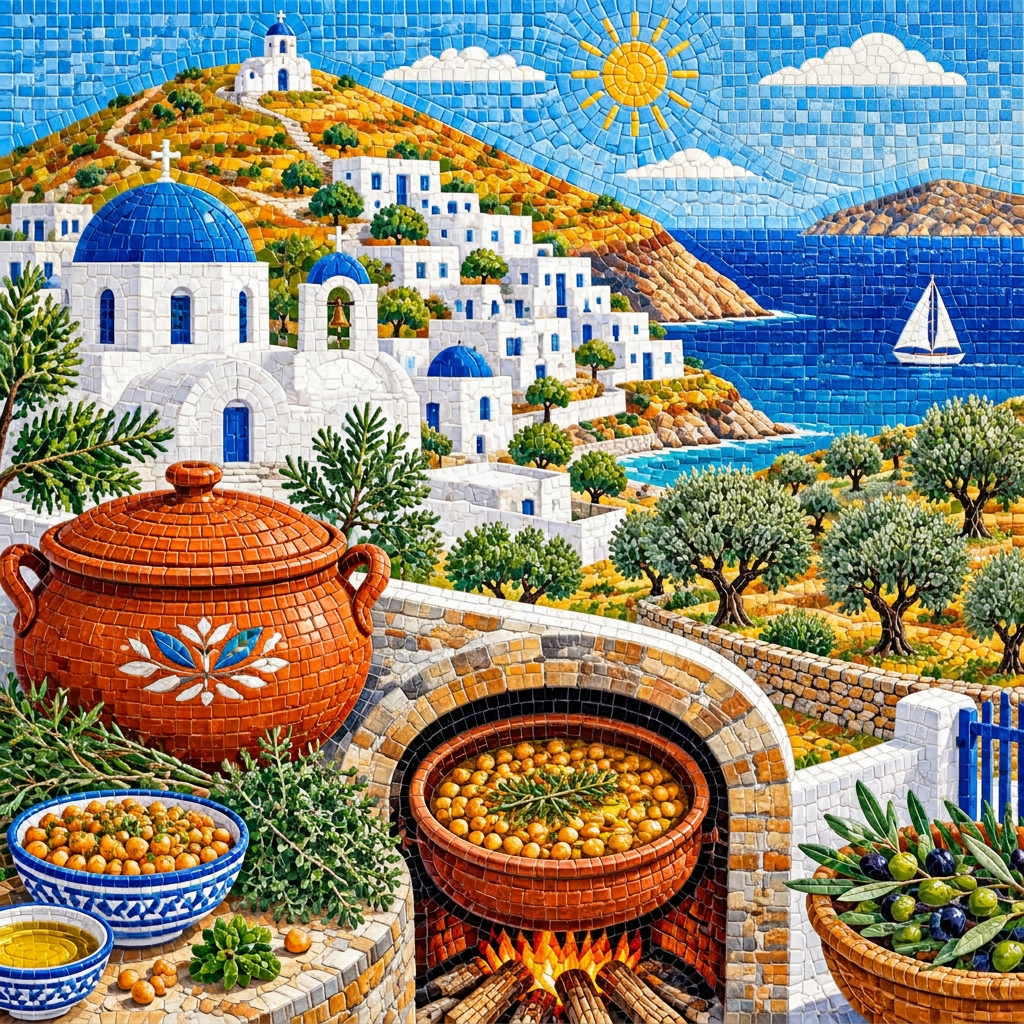
Chickpeas bake slowly overnight in a covered clay vessel until patience becomes the main ingredient you can taste.
Traditional Easter dish named for its cooking vessel
Lamb or goat cooks slowly with wine and dill in a clay pot, often supported above vine twigs.
Traditional island cheesemaking and wine-lees ageing
Seek the aged gilomeni style for the distinctive flavour developed through maturation with wine sediment.
A working pottery shop gives revithada’s clay pot its proper context: kitchen equipment first, attractive souvenir second.
5. Explorer's conclusion
Allow three or four days to combine villages, coastal walks, pottery and meals without watching the clock throughout lunch. Check seasonal bus and ferry schedules, carry water on paths and start longer walks early in hot weather. Ask when revithada is being cooked rather than assuming every kitchen serves an overnight dish on demand.
Sifnos rewards attention to ordinary things: a worn stone threshold, a potter’s working bench, a casserole emerging from the oven. Its ancient wealth built a treasury at Delphi; its present-day wealth is easier to share with a spoon.
Site by Dan Vineyard — images and site © 2026